


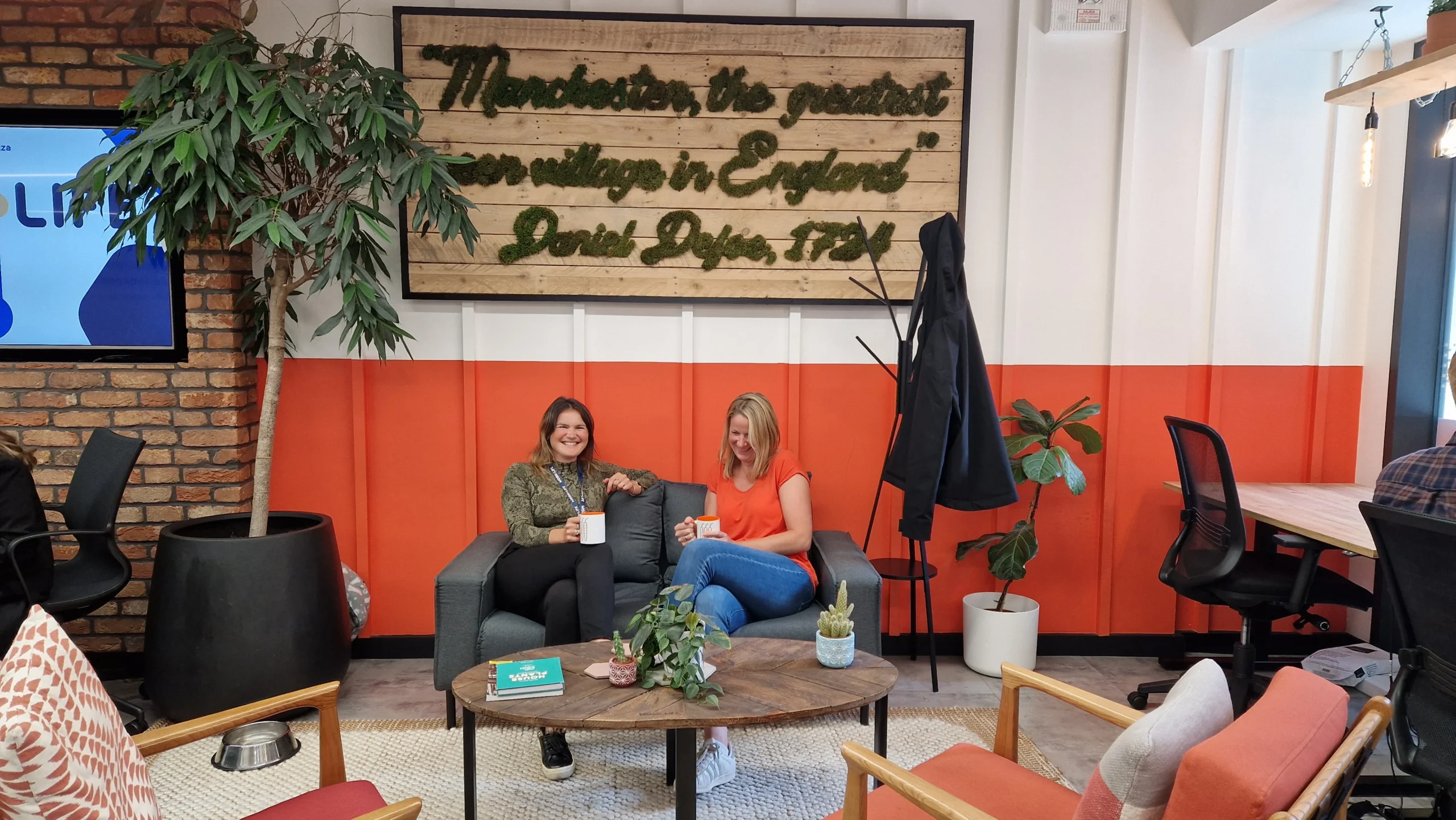
Louise Lavelle leads the Healthcare Communications team at Carrot Life Sciences, supporting her team across Medical Communications, Medical Education, Healthcare Advertising and Healthcare PR. We spoke to her about why she moved into Med Comms in the first place, how she supports her clients and candidates and how she keeps up to date with the latest industry trends:
How did you start recruiting in Medical Communications?
Prior to joining Carrot Life Sciences (then known as Carrot Pharma) on the Medical Communications team I worked for 8 years within IT recruitment. I loved most aspects of my job, supporting candidates and clients, but the IT sector didn’t excite me.
I knew friends at Carrot who were really happy so following maternity leave with my first daughter, I went to meet the team. Almost 10 years on, and I definitely made the right decision! I enjoy working with Medical Communications professionals across the industry who amaze me with their knowledge and dedication, all working towards the same goal of improving patient care and health outcomes for everyone.
What do you love the most about your job in Medical Communications?
Recruitment is a key priority for all the companies we work with, and knowing that I am playing my small part in keeping their projects on track, effectively resourced and enabling the company to grow is a great feeling.
From a candidate perspective, the first conversation with someone who is looking to change their employer is often quite negative as they list all the reasons they are unhappy at work. I love observing the transformation in that person as you give them options and opportunities that they didn’t even know existed! Then I’ll support them through every stage of the recruitment process and share their joy when they receive an offer of employment that reignites their passion.

Why should Director level Medical Communications professionals use you to find their next role?
I typically work with Scientific Directors, Medical Directors, Medical Education Directors, Director of Scientific Services, Client Services Directors, Director of Client Services, Business Unit Directors, Managing Directors and similar. I work with these people as both potential hiring managers and candidates, so I have a good oversight and strong network across the Medical Communications and Medical Education industry. I often know about vacancies before they are advertised and can use my industry knowledge to introduce the right people to the right companies creating new opportunities and mutually beneficial partnerships.
By working with us, you can take advantage of our connections and our large network of clients within your industry.
We can help you to reach contacts that you may not have access to and we can help get your CV into the right hands and in front of the right people. We can point you towards openings that are hard to find. We can also give you access to jobs that are confidentially advertised or not yet posted on the internet. With more options to apply to, you have a better chance of receiving the job offer you’re looking for.
Can you share some recent feedback you’ve received from a candidate you’ve helped?
“I recently had the pleasure of working with Louise during my job search, and I cannot recommend her services enough. From the outset, Louise demonstrated a keen understanding of my career aspirations and matched me with a position that perfectly aligned with my interests and skills.
Throughout the recruitment process, Louise was the ultimate professional – always there to facilitate communication with the company, guide me through each step, and manage expectations on both ends. Her support was instrumental in negotiating a salary that was aligned with my needs.
What truly sets Louise apart is her unwavering support and empathy. She checked in after each interaction, provided timely updates, and was a pillar of reliability—qualities that greatly alleviated the stress of job hunting. Her caring approach made me feel valued and confident, even in moments of uncertainty.
Securing my new position was a collaborative success, and I am certain that Louise’s involvement was key to this achievement. Moreover, I was impressed by her commitment to my career journey beyond the immediate scope of the job search. I knew that, win or lose, her support would be steadfast.
I have since shared my positive experience with colleagues looking to navigate new career paths, and I do so with the utmost confidence in Louise’s ability to provide exceptional guidance and support.
Thank you, Louise, for being more than just a recruiter and for being a trusted career ally.”
What major changes are you seeing within the Medical Communications landscape right now?
As AI becomes a bigger part of everyday workflows, the skills employers look for in medical communications professionals are starting to shift. Strong scientific writing remains a core requirement, but increasingly it’s being combined with broader strategic and collaborative capabilities. We’re seeing growing demand for professionals who can apply strong editorial judgement to AI-assisted content – reviewing, refining and validating outputs to ensure scientific accuracy, compliance and the right tone for the audience. Experience across publication planning, medical affairs strategy and omnichannel communications is also becoming increasingly valuable.
There’s also a clear appetite for people who are comfortable working with digital and AI-enabled tools. Not necessarily as technical experts, but as professionals who understand how these technologies can support communication objectives while maintaining quality and scientific integrity.
One thing that hasn’t changed is the value of being able to interpret complex clinical data and translate it into clear, engaging and audience-appropriate messaging. That remains one of the most sought-after skills in the market.
Perhaps most interestingly, AI isn’t just changing existing roles but it’s beginning to create entirely new ones. We’re seeing the emergence of hybrid positions that bring together science, content and technology, creating exciting opportunities for both employers and talent across the sector so an exciting time!
What kind of roles is Ai creating within Healthcare Comms?
One of the biggest shifts we’re seeing is a move away from purely production-focused roles towards positions that require more strategic thinking, oversight and decision-making. I have elaborated more here in my article, Medical Communications skills that are increasing in demand due to AI.
While AI can help speed up content development, it can’t take ownership of scientific accuracy, regulatory compliance or ethical considerations. Those responsibilities still rely on experienced professionals who understand the nuances of the industry.
As a result, employers are placing greater value on candidates who can act as quality gatekeepers – reviewing and refining AI-assisted content to ensure it meets the high scientific, regulatory and editorial standards expected across healthcare communications.
This is especially important in highly regulated environments, where accuracy, credibility and compliance are essential, and there is very little room for error.
What does that mean for those looking to hire in this sector?
For hiring managers, the message is clear: recruitment strategies need to keep pace with the way work is evolving.
We’re seeing increasing demand for mid-to-senior level professionals who can combine strong medical writing expertise with the ability to work effectively in AI-enabled environments. These individuals play a key role in helping organisations benefit from greater efficiency while maintaining the high standards of quality, accuracy and compliance the industry demands.
At the same time, expectations for early-career talent are changing. While AI may support some of the more routine aspects of content development, employers are increasingly looking for candidates with strong scientific foundations and the confidence to work alongside emerging technologies from day one.
All of this is contributing to a more competitive and nuanced hiring landscape, where success is defined by more than just output. Critical thinking, adaptability and sound scientific judgement are becoming some of the most valuable qualities employers can look for.
How do you keep up-to-date with the latest trends and news within Medical Communications?
Mostly by talking to interesting people all day every day! I love finding out what projects and accounts people are working on or recruiting for, what research is being published, what medical educational needs are being addressed, what therapy areas and diseases are in focus and what the future pipeline looks like. I also read as much as I can using sources such as MedComms Networking, MedComms News, PM Live, Pharmafield, Fierce Pharma, PharmaPhorum, Pharma Times and BBC Health News.
Looking for expert support in hiring within Life Sciences, biotech and pharma?
We support organisations across the full product lifecycle through dedicated specialist teams operating exclusively within niche functional markets. This focus enables us to deliver deeper market knowledge, stronger talent networks, and access to high-calibre candidates that generalist recruiters often cannot reach.
We pride ourselves on building long-term partnerships with clients, acting as trusted advisors rather than transactional suppliers. Our commitment to exceptional service is reflected in our 4.9 Google rating and longstanding relationships across the industry.
Notably, much of our work is now conducted through exclusive partnerships, enabling us to provide a highly tailored, high-quality service that drives long-term talent retention and business success.